

Sometimes you win.
Sometimes you get exactly what you wanted without even asking.
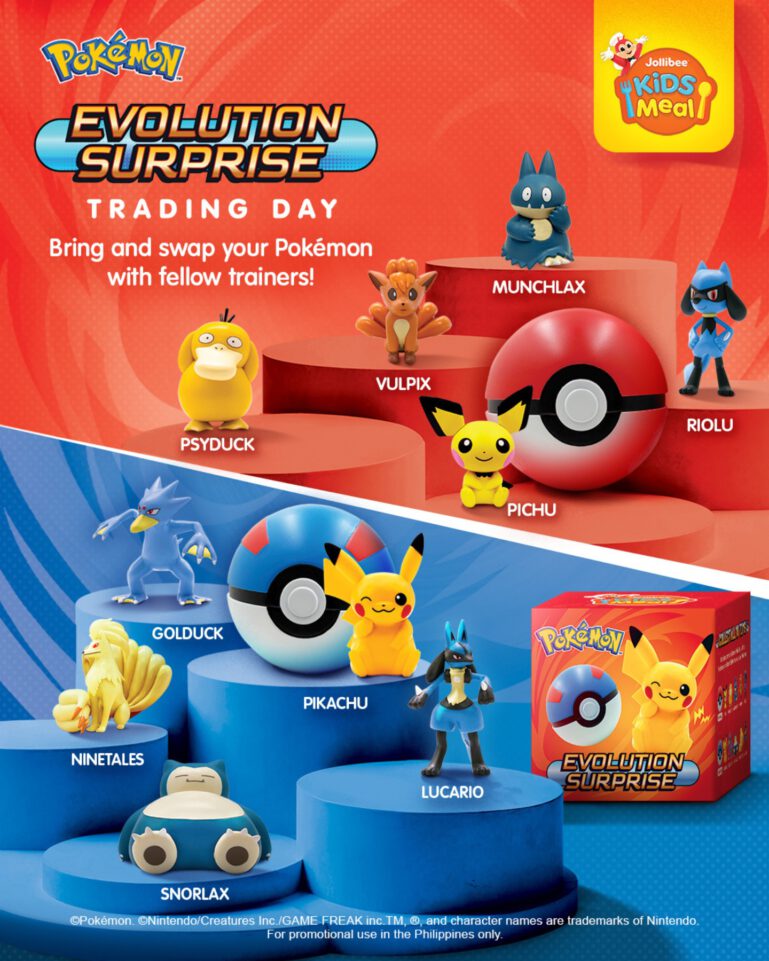
Jollibee just dropped a Pokémon Evolution Surprise promotion on February 1, 2026, and suddenly every parent in the country has a legitimate excuse to buy Kiddie Meals “for the kids.”
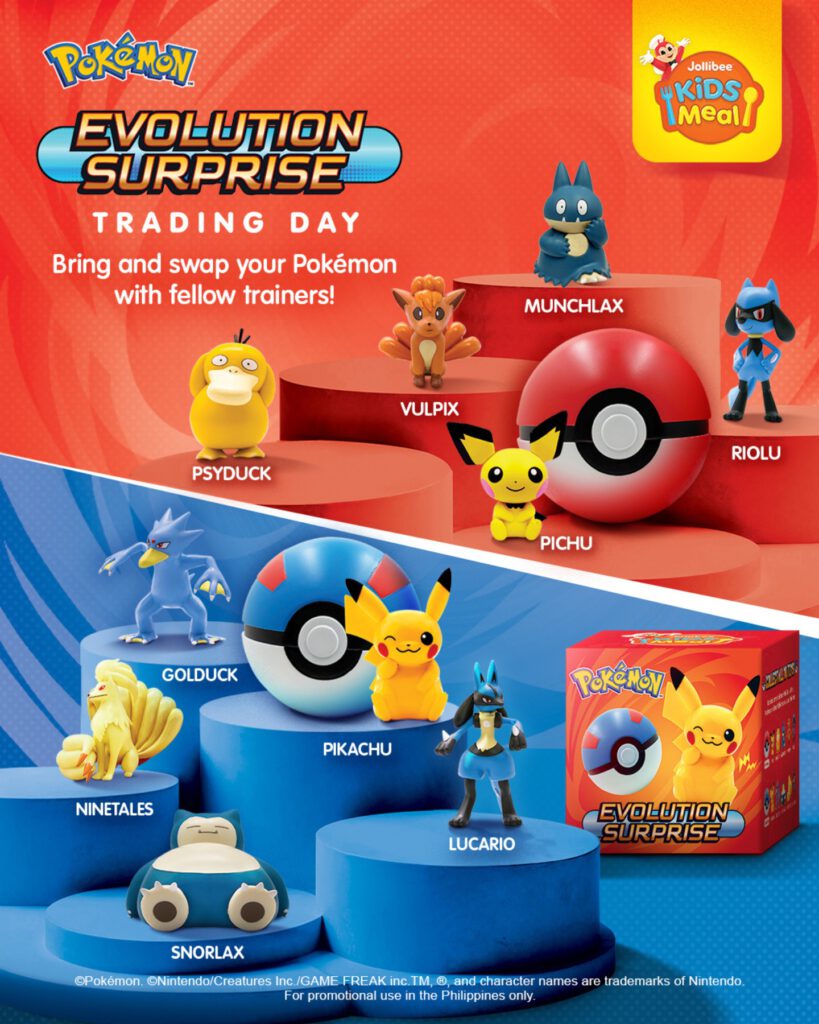
And although I’m not a Pokemon fan, I found myself buying six Kiddie Meals in one week in a bid to complete the collection.
What Is This Pokémon Evolution Surprise Anyway?
From February 1 to March 31, 2026, every Jollibee Kiddie Meal in the Philippines includes one Pokémon toy hidden inside a surprise box.
You don’t know which one you’re getting until you open it—classic blind-box thinking that works on both kids and adults who should know better.
The collection features 10 different figures showcasing five evolutionary pairs:
- Pichu → Pikachu
- Vulpix → Ninetales
- Munchlax → Snorlax
- Psyduck → Golduck
- Riolu → Lucario
Each figure comes attached to either a Poké Ball (the classic red-and-white design) or a Great Ball (the blue-and-white variant), complete with a clip so kids can attach them to bags.
Or adults.
No judgment.
The promotion launched at Jollibee’s 1,000th store with a Pokémon-themed event featuring games and activities, because Jollibee understands that milestone store openings deserve milestone promotions.
As Dorothy Ching, Jollibee Philippines’ vice president for marketing, put it: “Pokémon is one of the most loved franchises in the world, enjoyed by both children and adults. With the Pokémon Evolution Surprise, we’re bringing that excitement to families in a fun, unexpected way.”
And she’s right.
This isn’t just a kids’ promo.
This is a multi-generational cultural event disguised as a fast-food toy giveaway.
Understanding Pokémon: The Highest-Grossing Media Franchise Ever

Pokémon was created by Satoshi Tajiri, founder of Game Freak, and originated as a pair of role-playing games released on the Game Boy on February 27, 1996.
The games were called Pocket Monsters Red and Green in Japan (later released as Pokémon Red and Blue internationally).
Tajiri’s childhood fascination was collecting insects and small animals in his hometown of Machida, a city in western Tokyo. When urban expansion destroyed the green fields where he used to hunt for bugs, Tajiri claimed inventing Pokémon was an attempt to recover the world he lost.
The core concept was simple but revolutionary: players catch creatures called Pokémon, train them to battle other Pokémon, and trade them with friends.
The tagline “Gotta catch ’em all!” was created by Norman J. Grossfeld, former president of 4Kids Entertainment, and became one of the most recognizable phrases in pop culture.
The Development Hell That Almost Killed Pokémon
Pocket Monsters Red and Green took several years to produce and nearly bankrupted Game Freak in the process.
Investment from Creatures Inc. allowed Game Freak to complete the games, and in return, Creatures received one-third of the rights to the Pokémon franchise.
Five employees quit due to the financial conditions, and Tajiri worked many unpaid hours. By the time the games were ready to ship in 1996, the Game Boy was considered obsolete hardware. Nobody expected these games to succeed.
Then something happened that changed everything.
Unbeknownst to Nintendo at the time, developer Shigeki Morimoto secretly programmed a 151st Pokémon named Mew into the games.
When players discovered rumors of this elusive creature, the May issue of CoroCoro magazine announced the “Legendary Pokemon Offer”, centered around Mew.
Twenty winners were selected at random, and the lottery was a success, increasing word-of-mouth. By September, sales of Red and Green had surpassed 1 million units.
The games became sleeper hits. From 1998 to 2000, Pokémon was exported to the rest of the world, creating an unprecedented global phenomenon dubbed “Pokémania”.
The Anime That Made Pikachu a Global Icon
The popularity of the franchise led to an animated series premiering in Japan on April 1, 1997. The main character was a young Pokémon Trainer named Satoshi (after Satoshi Tajiri, later dubbed in English to Ash Ketchum).
The anime featured Ash’s partner Pokémon: Pikachu, a yellow electric mouse who refused to stay in its Poké Ball.
Pikachu is widely considered to be the most popular and well-known Pokémon species, largely due to its appearance in the Pokémon anime television series as the companion of series protagonist Ash Ketchum.
The anime debuted in the U.S. in September 1998, and its catchphrase “Gotta Catch ‘Em All!” became iconic, further cementing Pokémon’s place in pop culture.
The Trading Card Game Craze
The Pokémon Trading Card Game was launched in Japan in October 1996. Players could collect, trade, and battle with Pokémon cards, adding another layer of engagement to the franchise.
The cards became a global sensation, with tournaments and leagues forming around the game.
The card game has been shipped to 93 countries and regions in 15 languages, making it one of the most successful trading card games in history alongside Magic: The Gathering.
Pokémon Today: The Biggest Media Franchise Ever
Pokémon is estimated to be the world’s highest-grossing media franchise and is one of the best-selling video game franchises. As of March 2025, the series has sold over 489 million units of video games alone.
The franchise now includes video games across multiple generations, an anime with over 1,300 episodes and 20+ feature films, the Trading Card Game with around 3,000 unique cards, manga series, merchandise, and mobile games like Pokémon GO, which became a global phenomenon in 2016.
The book Millennial Monsters: Japanese Toys and the Global Imagination stated that Pikachu greatly helped to sell the Pokémon franchise, being described as the “center of the Pokémon craze” in Japan while also emerging as a leading symbol of the series when it was released in the United States. Pikachu has consistently been considered one of the most notable and influential anime, cartoon, and video game characters since its debut. The character has been regarded as the Japanese answer to popular Disney mascot Mickey Mouse.
This is why Jollibee’s Pokémon promotion matters. You’re not just getting a toy—you’re getting a piece of the biggest entertainment franchise in human history.
Meet the Pokémon in This Collection
Pichu → Pikachu: The Electric Mouse Evolution
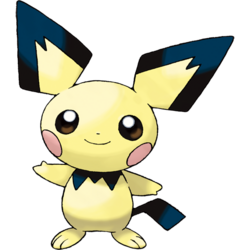
Pichu is the baby form, an electric mouse Pokémon that debuted in Generation II. The electric sacs in its cheeks are small. If even a little electricity leaks, it becomes shocked. It is not yet skilled at controlling electricity. When Pichu plays with others, it may short out electricity with another Pichu, creating a shower of sparks. In that event, this Pokémon will begin crying, startled by the flash of sparks.
Pichu evolves into Pikachu when leveled up with high friendship. It’s adorable, clumsy with its own powers, and represents the pure potential that comes before mastery.
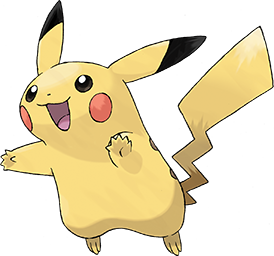
Pikachu is the face of the entire Pokémon franchise. Classified as an Electric-type Pokémon, Pikachu is a large yellow mouse with a lightning bolt-shaped tail, and red sacs on its cheek which can generate large amounts of electricity.
Designer Atsuko Nishida was tasked with developing Pikachu and its evolutionary line. She was obsessed with squirrels at the time due to their “comical” movement, and had the idea to have Pikachu store electricity in their cheeks similar to how squirrels store food. However, Pokémon creator Satoshi Tajiri chose to change the species to be a type of mouse when he was designing the setting.
When several Pikachu gather, their electricity can build and cause lightning storms. When it is angered, it immediately discharges the energy stored in the pouches in its cheeks.
Pikachu’s name combines two Japanese sounds: ピカ (pika), a sparkling sound, and チュー (chū), a mouse squeak. It’s literally the sound of electricity plus the sound of a mouse. Brilliant.
Vulpix → Ninetales: The Mystical Fox
Vulpix is a Fire-type fox Pokémon with six orange tails. According to the Pokédex, when it is born, Vulpix possesses one snow white tail that eventually splits into many tails as it grows older. The tails grow hot as Vulpix approaches evolution.
Vulpix is capable of manipulating fire to such precision as to create floating wisps of flame. These wisps are sometimes mistaken for ghosts by humans, but Vulpix uses them to assist in catching prey.
Vulpix is based on kitsune, the mythical Japanese fox spirits. One legend explains how multi-tailed kitsune can breathe fire, create illusions, and have extremely long lives. After concluding their life cycle, these creatures take on a spirit form, which may explain why Vulpix and Ninetales can learn Psychic-type and Ghost-type moves. Since many kitsune are able to transform themselves into women to trick men, this explains why the Vulpix evolution family is predominantly female.
Vulpix evolves into Ninetales when exposed to a Fire Stone.


Ninetales is the majestic nine-tailed evolution. It has nine long tails and fur that gleams gold. It is said to live for 1,000 years. Some legends claim that each of its nine tails has its own unique type of special mystical power.
The connection to Japanese mythology runs deep here. Ninetales represents the kyūbi no kitsune—the nine-tailed fox spirit that appears in folklore across East Asia. Having this Pokémon in a Jollibee toy collection brings genuine cultural weight to what could have been just another fast-food promotion.
Munchlax → Snorlax: The Eating Champions
Munchlax is the baby form of Snorlax, introduced in Generation IV. It’s known for having an enormous appetite and hiding food under its long fur. Munchlax will eat anything, and won’t stop until it’s consumed its own body weight in food.


Snorlax is one of the most recognizable Pokémon from Generation I. It’s massive (over 1,000 pounds), lazy, and known for blocking roads while sleeping. Snorlax has become a cultural icon representing the desire to just eat and sleep without responsibilities—basically, everyone’s spirit animal.
The irony of having Munchlax and Snorlax in a Kiddie Meal promotion focused on eating is not lost on me. Well played, Jollibee.
Psyduck → Golduck: The Confused Ducks
Psyduck is a yellow duck Pokémon that’s constantly suffering from headaches. The headaches unlock its psychic powers, but Psyduck itself doesn’t understand what’s happening. It’s perpetually confused and holding its head in pain.
Psyduck became a fan-favorite in the anime because of its comedic incompetence. It would pop out of its Poké Ball at the worst times, look confused, and occasionally unleash devastating psychic attacks while having no idea what it was doing.

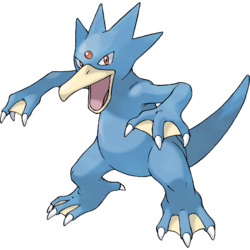
Golduck is the evolved form—blue, streamlined, and fully in control of its psychic abilities. It’s fast, powerful, and represents what Psyduck could be if it ever got its headaches under control.
Riolu → Lucario: The Aura Warriors
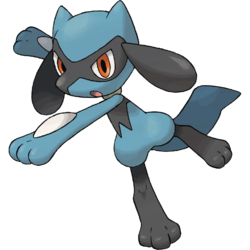
Riolu is a Fighting-type Pokémon introduced in Generation IV. It’s the baby form that can sense auras—the life force energy in all living things. Riolu are loyal, brave, and train constantly to master their abilities.
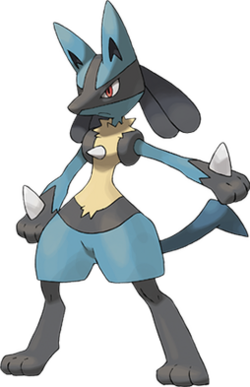
Lucario is a Fighting/Steel-type that masters aura manipulation. It can read minds and emotions through aura, communicate telepathically, and unleash devastating aura-based attacks. Lucario became massively popular after starring in the eighth Pokémon movie, “Lucario and the Mystery of Mew,” in 2005.
In competitive Pokémon battles, Lucario is a genuine threat with high Attack and Special Attack stats, decent Speed, and a unique type combination. Having Lucario in this collection is a nod to serious Pokémon fans, not just casual collectors.
Why Jollibee Kiddie Meals Matter (And Always Have)
Why do parents and kids love Jollibee’s Kiddie Meals?
For Parents: The Sanity Saver
Kiddie Meals solve the eternal parenting problem: how do you feed your child something relatively balanced while also making them happy enough to sit still for 20 minutes?
Jollibee’s Kiddie Meals include a main dish, a side, a drink, and now a collectible toy. For parents, this is:
- Portion-controlled: No arguments about how much to order
- Variety: Multiple main dish options so picky eaters have choices
- Entertainment value: The toy keeps kids occupied while you actually eat your own food
- Affordable: Compared to ordering à la carte for kids who won’t finish anything
- Nostalgia trigger: Parents who grew up with Kiddie Meals now buy them for their own children
The Pokémon promotion amplifies all of this. Now there’s an actual collecting element where kids (and parents) want to come back to complete the set. It’s brilliant marketing that also happens to create genuine family bonding moments.
For Kids: The Complete Package
From a kid’s perspective, Kiddie Meals are magic. You get:
- Food you actually like (not the weird stuff parents try to make you eat at home)
- A toy you didn’t expect
- The excitement of not knowing which Pokémon you’ll get
- Trading opportunities with friends who got different ones
- Something to show off at school
The blind-box element of this Pokémon promotion taps into the same psychology that made the Trading Card Game successful: the thrill of possibility. Maybe you’ll get the rare one. Maybe you’ll complete your evolution pair. Maybe you’ll get duplicates and can trade with your cousins.
For kids, this isn’t just a meal—it’s an event.
The Best Jollibee Kiddie Meals: What to Actually Order
Dilemma: You’re at Jollibee, you want that Pokémon toy, but you also want food that’s actually good.
Here are the best options:
1. Burger Steak Kiddie Meal (The Reliable Choice)
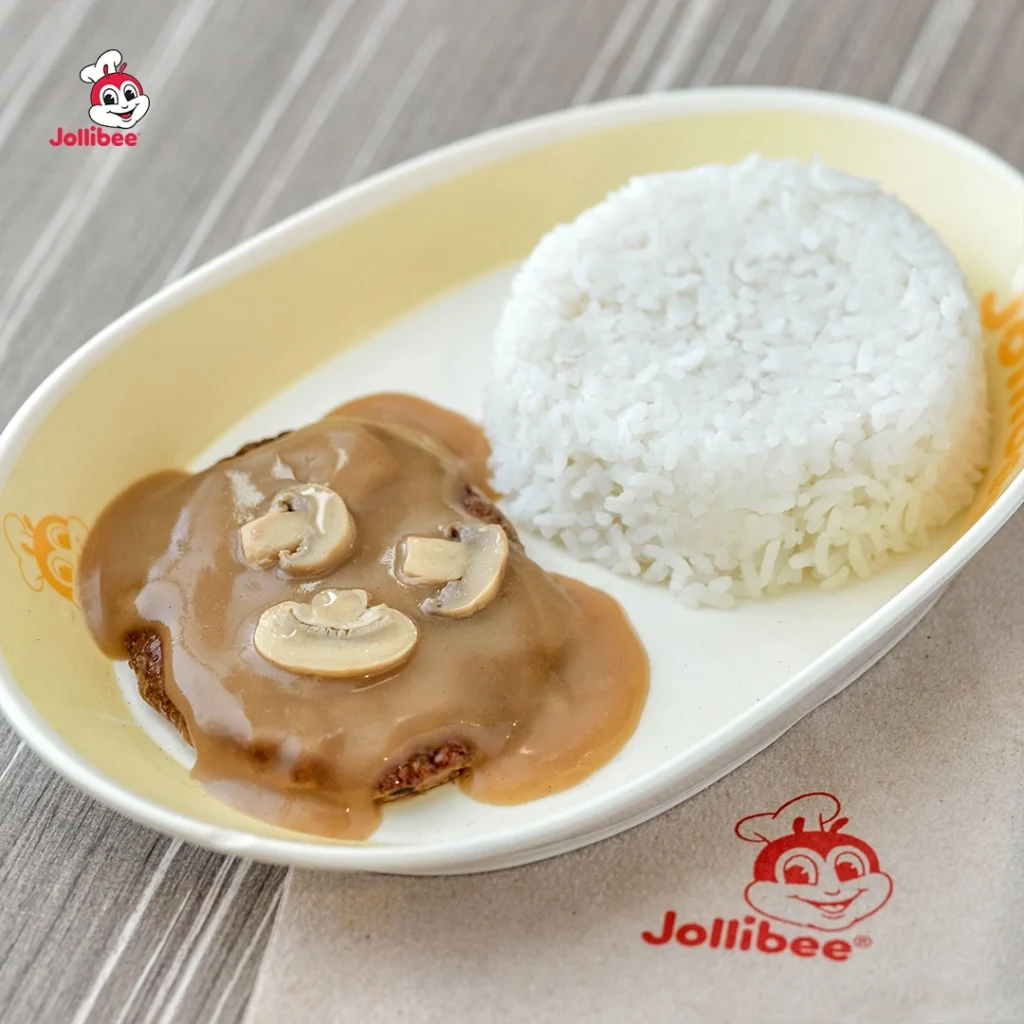
The Burger Steak is peak Filipino comfort food: a hamburger patty served with mushroom gravy and rice. It’s what Jollibee does best—taking a Western concept and making it distinctly Filipino.
Why it’s the best for kids:
- The gravy makes everything taste better (kids love dipping)
- The patty is tender enough for young mouths
- Rice as the carb means it’s more filling than fries
- The mushroom gravy isn’t spicy or overwhelming
- It’s basically the same thing many Filipino kids eat at home, so there’s familiarity
Why adults should consider it:
- It’s genuinely delicious comfort food
- The portion is small enough that you won’t feel overstuffed
- Pairs well with whatever else you’re ordering for yourself
- The gravy is addictive—if you grew up with this, you know
2. 1-Piece Chickenjoy Kiddie Meal (The Crowd-Pleaser)
Chickenjoy is Jollibee’s flagship product—the crispy fried chicken that made them famous. Getting the Kiddie Meal version means one piece of Chickenjoy plus rice and a side.
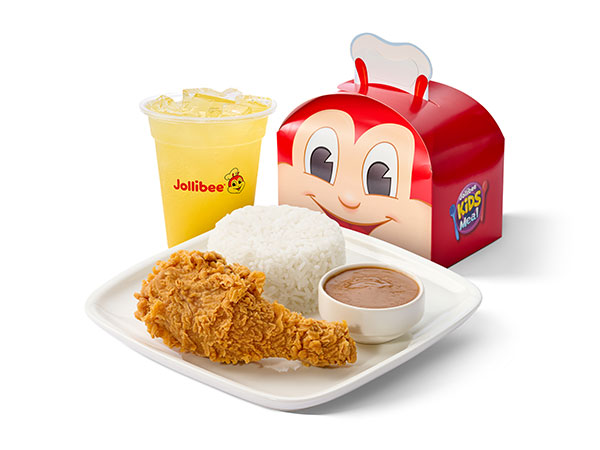
Why it’s exceptional:
- Chickenjoy is objectively some of the best fried chicken in the fast-food game
- The breading is perfectly crispy without being greasy
- The chicken stays juicy inside
- Kids can eat it with their hands or with rice
- It’s the quintessential Jollibee experience
Why this might be the move:
- If you’re buying the Kiddie Meal for yourself (no shame), Chickenjoy is what you actually want
- One piece is enough to satisfy without being excessive
- You can always order more Chickenjoy separately if you’re still hungry
- It’s the meal that reminds you why Jollibee is Jollibee
3. Jolly Spaghetti Kiddie Meal
Jolly Spaghetti is Filipino-style spaghetti: sweet tomato sauce, hot dogs, and cheese. It’s polarizing if you’re not used to it, but Filipino kids grow up loving this stuff.
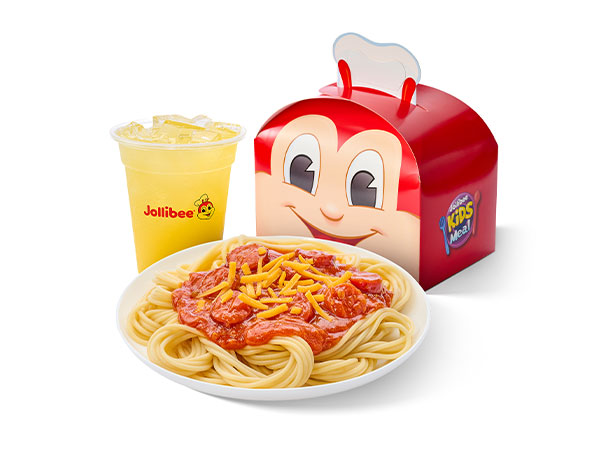
Why kids love it:
- It’s sweet (Filipino spaghetti sauce has sugar)
- Hot dog slices are fun
- Cheese makes everything better
- It’s easy to eat
- The sweetness appeals to young palates
When to order this:
- If your kid already likes Jolly Spaghetti (don’t introduce it on a day when you’re hoping for smooth sailing)
- If you’re trying to expand their palate with something that’s still familiar
- If you know they’ll eat pasta but not meat
My Recommendation:
For kids 3-7: Burger Steak. The gravy makes it delicious, the rice fills them up, and it’s not that messy.
For kids 8-12: 1-Piece Chickenjoy. They can handle eating chicken properly, and Chickenjoy is a rite of passage.
For adults buying for themselves: 1-Piece Chickenjoy. Let’s be honest, you came for the Pokémon toy, but you’re staying for the Chickenjoy.
For adventurous eaters: Jolly Spaghetti. If you’ve never had Filipino-style spaghetti, this is your chance. Just know it’s going to be sweeter than you expect.
Pros and Cons of Kiddie Meal Collectible Toys (Using Pokémon Evolution Surprise as the Example)
Pros:
- Creates genuine excitement and anticipation for both kids and nostalgic adults
- Encourages repeat visits to Jollibee (good for the business, good for collectors)
- Provides bonding opportunities between parents and children who both know Pokémon
- Clip-on feature makes toys functional, not just decorative junk that gets lost
- Evolution pairs create collecting strategy rather than random accumulation
- Limited-time promotion (Feb 1 – Mar 31) adds urgency without being exploitative
- Poké Ball and Great Ball variants add collectibility without being impossible to complete
- Ties into existing Pokémon Trading Card Game culture already popular in the Philippines
- Educational value: Kids learn about evolution, collections, trading, and delayed gratification
- Affordable collecting: Much cheaper than buying Pokémon cards or official figures
- Social element: Kids trade duplicates, compare collections, build friendships
- Multi-generational appeal: Parents who grew up with Pokémon now share it with kids
- Quality figures: Not flimsy cheap plastic, actual decent-looking collectibles
- Includes fan-favorite Pokémon: Pikachu, Lucario, Snorlax are all massively popular
- Promotes healthy eating habit framing: “Eat your meal, get your Pokémon”
Cons:
- Blind-box frustration: Kids might get duplicates while missing ones they want
- Trading card psychology can be stressful for kids who feel pressure to complete sets
- Parents may feel pressured to buy multiple meals to satisfy collection obsession
- Waste generation: 10 toys means 10 plastic Poké Balls that may eventually be discarded
- Creates have/have-not dynamics among children whose families can/can’t afford multiple visits
- Time-limited exclusivity may cause FOMO (Fear Of Missing Out) stress
- Encourages overconsumption: Buying food for toys rather than hunger
- Storage issue: Where do you keep 10 Pokémon figures long-term?
- Attachment issues: Kids may get upset if toys are lost or broken
- Comparison culture: “I have 8, you only have 3” playground dynamics
- Distraction from actual meal: Kids focus on toy reveal, don’t eat properly
- Unequal distribution: Some Jollibee branches may run out of certain figures
- Adult collectors may reduce availability for actual children
- Creates secondary market: People may try to resell complete sets at markup
- Environmental impact: Plastic toys have carbon footprint and disposal concerns
My Final Recommendation
Look, I’m going to be honest with you. This Pokémon Evolution Surprise promotion is one of the best Kiddie Meal promotions I’ve seen in years. The toys are quality, the Pokémon selected are genuinely popular (not deep-cut obscure ones), and the evolution pairs create a collecting framework that feels satisfying.
I would recommend:
- Set expectations with your kids upfront: “We’re getting Kiddie Meals, and whichever Pokémon we get is the one we celebrate. If we get duplicates, that’s okay—we can trade with friends.”
- Don’t go overboard trying to complete the set immediately: The promotion runs through March 31. You have time. Buying seven Kiddie Meals in one week is excessive. Overkill.
- Choose the Kiddie Meal that matches your kid’s actual food preferences: Don’t order Burger Steak if your kid hates mushroom gravy. The toy is a bonus, not the main event.
- Use this as a bonding opportunity: Tell your kids about how you played Pokémon as a kid (if you did). Watch some Pokémon episodes together. Make it about more than just collecting.
- Consider the 1-Piece Chickenjoy if you’re buying for yourself: Let’s not pretend you’re not tempted. Chickenjoy + Pokémon toy = valid life choice.
The Pokémon Evolution Surprise is everything a promotional toy series should be: collectible without being predatory, nostalgic without being cynical, and fun for both kids and adults. Jollibee understood the assignment and delivered.
Everyone wins.
Now go catch them all!