


We have a Mitsubishi L200 Endeavor at home.
It used to be a pickup truck for farm use but since it still looked too nice to go through that abuse, it’s now mostly used on the highway and the usual daily Davao driving in between.
The time to replace its tires is fast approaching and I realized I actually didn’t know as much about choosing tires as I thought I did.
So I did my homework.
And here’s what I learned, not just for pickup trucks but for everyone.
Step 1: Read the Sidewall of Your Current Tire
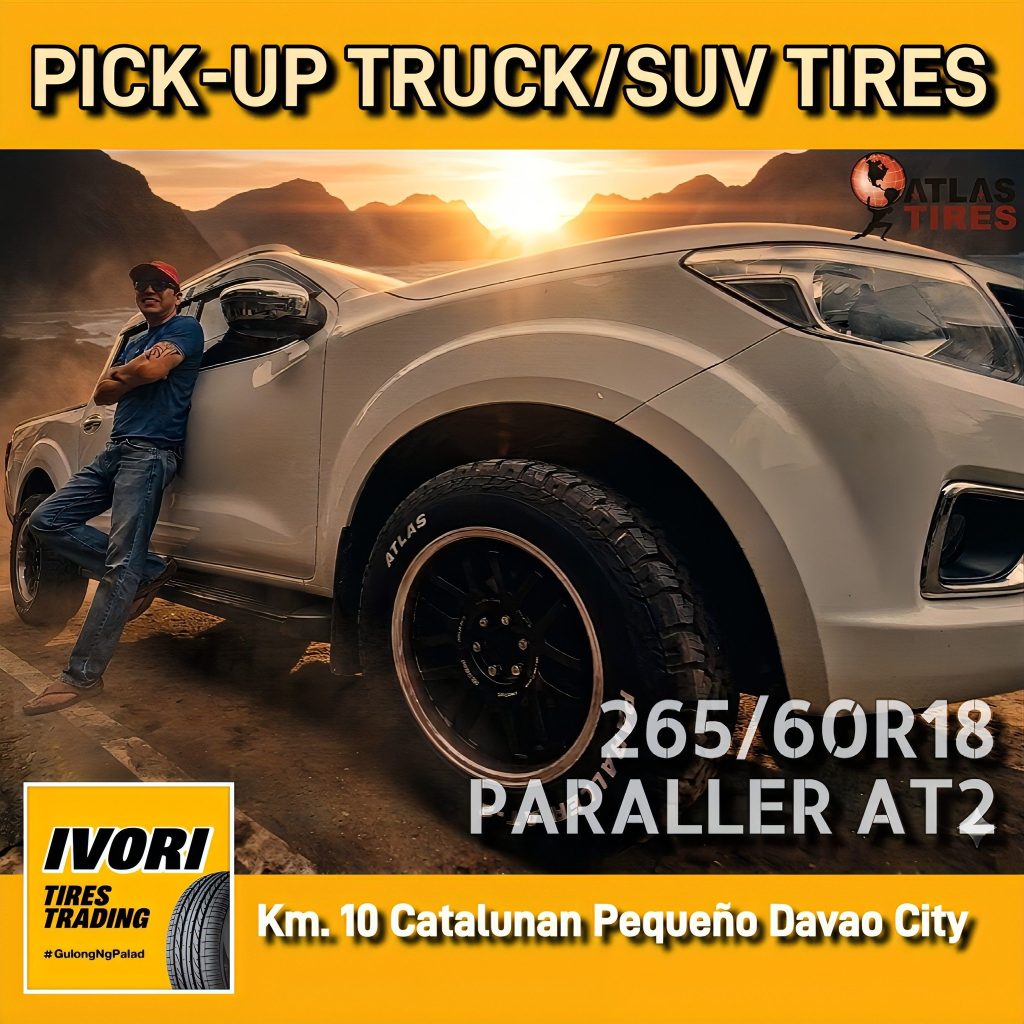
Before anything else, look at the sidewall of your existing tire. You’ll see something like this:
265/60 R18
That’s not random. Here’s what it means:
- 265 — the width of the tire in millimeters
- 60 — the aspect ratio (the height of the sidewall as a percentage of the width)
- R18 — the wheel diameter in inches (this is the size of your rim)
You need to match these numbers when replacing your tires unless you’re intentionally upsizing, which is a different thing.
When in doubt, check your owner’s manual or the sticker inside your driver’s door frame. It’ll show the manufacturer’s recommended tire size.
Step 2: Know What Type of Tire You Actually Need
This is where most people go wrong.
They buy what looks cool, or what a friend recommended, without matching it to how they actually use the vehicle.
Here’s a simple breakdown:
| Tire Type | Best For | Not Ideal For |
| Highway Terrain (H/T) | Mostly paved roads, daily driving, long highway trips | Off-road, rough terrain |
| All-Season / Touring | City driving, mixed conditions, fuel efficiency | Serious off-road use |
| All-Terrain (A/T) | Mixed use: highways AND occasional rough roads | Purely city driving (noisier) |
| Mud Terrain (M/T) | Serious off-road, muddy and rocky trails | Highway (very noisy, wears fast on asphalt) |
If your driving is mostly on paved surfaces like city streets and highways, Highway-Terrain tires are a suitable choice.
They deliver a smooth and quiet ride, making them comfortable for daily commuting and long road trips. Their finer tread patterns provide reliable grip and are engineered to be low-noise on asphalt.
For our L200 Endeavor, which spends most of its life on the highway with occasional rougher roads… an All-Terrain tire is the sweet spot.

All-Terrain tires are some of the most versatile available, built to perform well on paved roads while still offering the toughness needed for gravel, dirt, or light trails.
You don’t sacrifice too much highway comfort, but you gain confidence when the road gets interesting.
If you live in a more provincial setting or frequently drive on gravel, sand, or light mud, all-terrain tires are designed to handle those conditions effortlessly while still being usable on regular roads.
Mud terrain tires are for people who genuinely go deep off-road regularly. If you’re mostly on asphalt… they’re overkill. They’re noisier on the highway, they wear faster on pavement, and they’re harder on fuel consumption.
Step 3: Match the Tire to Your Vehicle Type
For most sedans and daily city drivers, reliable Passenger Car Radial tires perform well. Mid-range all-season radial tires typically fall between ₱3,000 and ₱8,000 per tire, which is a reasonable investment for most budgets.
Here’s a rough guide by vehicle type:
Small cars (Wigo, Beat, Mirage, Vios): All-season touring tires. Prioritize comfort, fuel efficiency, and wet weather grip. You don’t need anything aggressive.
Sedans and compact crossovers (Sonet, Coolray, Yaris Cross): All-season or touring tires. Same principle as above but in slightly larger sizes. Wet grip matters a lot here especially for Davao’s rainy season.
MPVs and SUVs (Xpander, Fortuner, Everest): Consider all-season or all-terrain tires for versatility.
Pickup trucks (L200, Hilux, Ranger, Strada): All-terrain is almost always the right answer unless the truck literally never leaves smooth asphalt. Something that handles rough terrain confidently is a well-proven choice for this class of vehicle.
Step 4: Check the Load Index and Speed Rating
These two numbers appear after the tire size on the sidewall and they matter, especially for trucks and SUVs carrying loads.
The load index tells you the maximum weight the tire can carry. The speed rating tells you the maximum speed the tire is designed for.
Always make sure your replacement tires meet or exceed the original ratings from your manufacturer. Going lower than the original spec is a safety risk.
Step 5: Budget Honestly
Premium brands last longer but come at a 30 to 50 percent price premium. That’s worth it if you drive over 20,000 kilometers a year. Budget options work for short commutes but wear faster under heavy or sustained use.
The honest advice: don’t buy the cheapest tire you can find for a vehicle that carries your family regularly.
But you also don’t need to buy the most expensive option if your driving is mostly city streets.
Match the investment to how hard the tire will actually work.
If you’re in Davao, you might want to consider buying your tires from Ivori Tires Trading. They’re conveniently located at Km. 10 Catalunan Pequeno, Davao City.
They have a knowledgeable staff and excellent stoks at excellent prices.
Iyong Karamay sa #GulongNgPalad
And one last thing… whatever tire you choose… maintain it properly.
Keep it at the right PSI, rotate them regularly, and replace them when the tread is worn. A great tire that’s underinflated and neglected will perform worse than a budget tire that’s properly maintained.
Choose smart.
Maintain consistently.
And your tires will take care of you.
And don’t leave home without a tire inflator:
It won’t cost you extra to buy through these links, and I get a small commission that helps keep this site going. Thank you!