
I’ve gone through my fair share of microphones over the years.
From basic condenser mics for desktop recording, to lavalier mics for quick work calls, to various audio tools I’ve collected while figuring out how I want to sound online—audio has always been one of those things I take seriously.
Especially now, as I’m slowly but surely amassing equipment to support my plans of being more active on my websites, YouTube, and even social media content tied to my music.
So when I started seeing multiple positive reviews about the Maono Wave T1 Mini, my curiosity kicked in.
I didn’t need another mic—but anyone who works with content knows that sometimes the right tool makes all the difference.
After digging into what Maono had to say about the product and seeing how compact and flexible it looked, I decided to go ahead and purchase one.
First Impressions: Small, Clean, and Purposeful
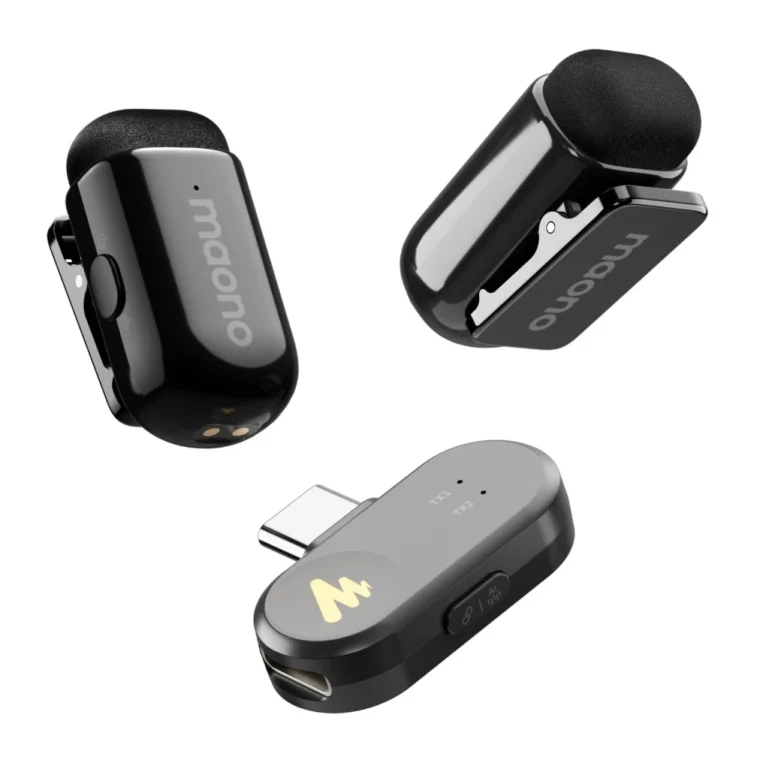
The first thing that stood out to me about the Maono Wave T1 Mini is its size. This thing is tiny—in a good way.
Despite its size, it doesn’t feel like a toy. The design is clean, minimal, and very much aligned with Maono’s identity as a brand focused on modern internet audio.
Maono itself is no small name either. According to their own materials, Maono—meaning “vision” in Kiswahili—is the No.1 best-selling internet microphone brand worldwide, with products sold in 153 countries.
That kind of reach doesn’t happen by accident.
What’s Inside the Maono Wave T1 Mini System
One thing I appreciated right away is how flexible the Wave T1 Mini is when it comes to connectivity. Maono clearly designed this for people who move between devices.
Included Receiver Options
| Receiver Type | Use Case |
| USB Type-C Receiver | For phones, tablets, computers, and devices with Type-C ports |
| Lightning Receiver | For iPhones and Apple devices with Lightning ports |
| 3.5mm TRS Receiver | For cameras, mixers, and other devices with 3.5mm input |
This alone makes the Wave T1 Mini incredibly practical. I don’t have to think twice about whether it’ll work with my setup because it obviously does. Just remember though that these (USB-C and Lightning connections) are not interchangeable. So make sure you take extra care in choosing the type when you go ahead and order one.
Transmitter
The TX transmitter acts as the microphone itself, and it keeps things refreshingly simple:
- Long press the power button for 2 seconds to turn it on or off
- Compact and easy to clip or place
- Automatically paired with the receiver out of the box
I didn’t need to fiddle around much. The transmitter and receiver are already paired from the factory, which is exactly how these things should be.
The Noise Reduction Feature Works as Advertised
This is where the Maono Wave T1 Mini really won me over.
I’ve used it extensively in work meetings, and the difference in my audio quality was noticeable enough that people actually commented on it.
Clearer voice, less background noise—and I didn’t even need to wear headphones.
The noise reduction feature is easy to control and surprisingly powerful for such a small device.
Noise Reduction Levels
| Click Count | Level | Indicator |
| 1 Click | Low | Green light flashes once |
| 2 Clicks | Medium | Green light flashes twice |
| 3 Clicks | Strong | Green light flashes three times |
| 4 Clicks | Super Strong | Green light flashes four times |
You can cycle through these levels directly on the transmitter or receiver. No apps, no software, no overthinking.
Just tap and go.
For someone like me who values speed and reliability, that’s a big win.
Real-World Use: Work, Content, and Music
Where the Maono Wave T1 Mini surprised me most was how versatile it turned out to be.
For Work Meetings
- Clearer voice
- Less environmental noise
- No need for bulky headsets
- Professional-sounding audio without effort
For Content Creation
As I continue building momentum on my websites and prepare to be more active on YouTube, having reliable audio gear is non-negotiable. This mic fits perfectly into that plan—small enough to stay out of the way, but good enough to trust.
Here’s my first attempt at content creation with the voiceover done via the Maono Wave T1 mini.
For Music
I also discovered that it works well enough for recording vocals for the songs I’m covering with my band AcidRadius.
These are tracks I plan to publish on our YouTube, TikTok and Instagram, and while this isn’t a replacement for a full studio setup, it absolutely holds its own for clean vocal capture in a controlled environment.
That alone says a lot about its usefulness beyond just calls and casual recordings.
Pairing and Setup: Straightforward and Beginner-Friendly
Pairing is mostly automatic, but if needed, Maono provides clear steps for both phone and camera setups. The indicators make it obvious when pairing is successful—blue lights stay on, and you’re good to go.
Pros and Cons After Real-World Use
Like any piece of gear, the Maono Wave T1 Mini isn’t perfect—but most of its quirks are understandable once you factor in its size, purpose, and price.
Pros
- Extremely compact and portable – This is a huge plus for me. I can throw it in a bag and bring it anywhere without thinking twice.
- Easy to use and quick to set up – No complicated menus, apps, or software needed.
- Effective noise reduction with adjustable levels – Especially useful for work meetings and quick recordings.
- Improved audio quality without headphones – People at work immediately noticed the difference.
- Multiple receiver options for different devices – Works across phones, computers, and cameras depending on the receiver used.
- Suitable for work, content, and light music recording!
- Budget-friendly entry point – I went with the single transmitter version due to budget constraints, and it still delivered.
Cons
- Small size is a double-edged sword – While it’s great for portability, it’s also probably easy to lose if you’re not careful.
- Wireless-only operation – I do wish there was a way to convert the lavalier into a wired microphone. Relying on wireless all the time could introduce latency in theory—though in my use, I haven’t actually experienced any noticeable delay.
- Confusing USB-C port on the receiver – I initially didn’t know what it was for and only later found out it’s strictly for charging. It could have been a nice option for wired use, but the transmitter itself doesn’t have a USB-C port.
- Charging design is a bit unusual – Instead of a USB-C port on the mic, it uses magnetic poles that connect to the charging housing. It works, but it’s not immediately intuitive.
- Manual takes a moment to get used to –andthat’s bad for me
- Designed for simplicity, not deep customization – not that I’m looking to customize it but it would sure be nice to have that option.
- Single transmitter limitation – I only bought the one-mic version due to budget, but I can already see myself wanting additional transmitters in the future.
Who Is This Mic For?
Based on how I’ve been using it, the Maono Wave T1 Mini clearly targets people who value convenience, portability, and clean audio without needing a full studio setup.
This mic is a good fit for:
- Remote workers and professionals who attend frequent online meetings and want noticeably better audio without wearing headphones all day.
- Content creators and bloggers who are starting to become more active on their websites, YouTube, and social platforms and need a simple, reliable audio solution.
- Musicians and bands who want a compact mic for quick vocal recordings, demos, or social media content—especially for platforms like YouTube and Instagram.
- People building their gear collection slowly – If you’re like me and gradually amassing equipment as your projects grow, this is a solid piece to start with.
- Users on a budget who still want something that feels well thought out and professional, even in its most basic single-transmitter version.
This mic may not be ideal for:
- Users who prefer fully wired microphone setups and want zero reliance on wireless connections.
- People looking for advanced audio controls or deep customization typically found in full studio microphones.
- Those who are prone to misplacing small gear and don’t want to worry about losing a very compact device.
Overall, the Maono Wave T1 Mini feels purpose-built for modern internet use—work, content, and creativity—rather than traditional studio recording. And for someone like me, who lives in that space more and more every day, that makes it a very practical addition to my setup.
I genuinely like the Maono Wave T1 Mini.
It does exactly what it promises. The noise cancelling works, the audio quality is solid, and the convenience factor is huge—especially for someone juggling work, content creation, and music.
Based on my experience with this mic alone, I believe Maono is a good brand, and I’m confident that I’ll be buying more of their products in the future.
For anyone building an online presence, recording content, attending meetings, or even dipping into music projects—this little mic earns its place in the gear bag.
And sometimes, that’s all a piece of equipment really needs to do.
Want one? Get it here:
Maono Wave T1 Mini
It won’t cost you extra to buy it and I get a nice little commission which helps me keep this website going.
Thank you!

