I first noticed something was off during a regular grocery run at SM Lanang.
I’m a creature of habit so I basically have a routine when I go grocery shopping. I basically enter the same entrance every time and go to the same aisles in the same sequence while going through the same mental checklist.
And when I got to the Baby Diapers section, I found there to be no Pampers on the shelves.
I walked back and forth thinking maybe I missed a shelf, maybe stocks were just low.
Nothing.
Not even a stray pack hiding behind another brand.
As a father with a toddler still in diapers, that moment was… unsettling.
Like many Filipino parents, I don’t just buy diapers—I buy Pampers.
Or at least, I used to.
Eventually, I had to grab Rascals as a temporary fix.
And because I didn’t want to risk running out of diaper supplies, I did a test order for Rascals diapers on Shopee.
I also did a quick search and I found out that:
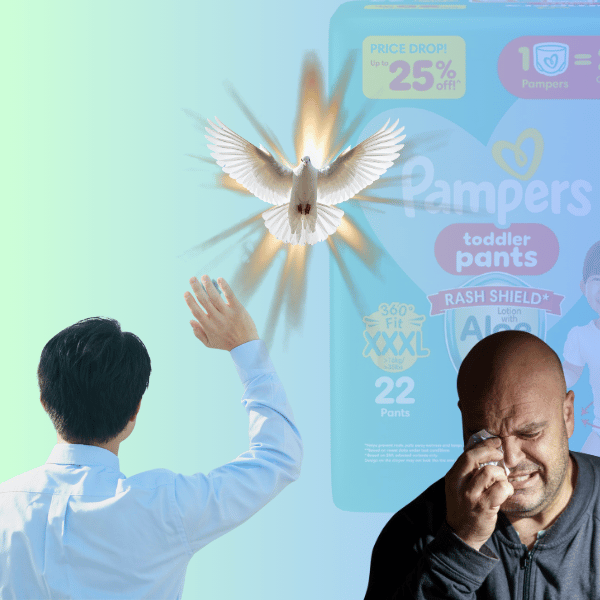
Pampers is gone—from local production and sale in the Philippines.
In December 2025, Procter & Gamble (P&G) Philippines confirmed that they had stopped local production and sales of several product categories:
- Baby care (Pampers)
- Feminine care (Whisper pads)
- Laundry bars (Tide and Ariel bars)
This wasn’t just a rumor spreading on Facebook. It was real, official, and final.
Why Did P&G Pull Out Pampers?
According to P&G, the decision was part of a broader strategy to:
- Refine their product portfolio
- Focus resources on stronger-performing brands
- Adapt to changing consumer habits
- Respond to intense price competition
In simple terms:
Pampers became too expensive for a market that now prioritizes affordability.
Now, Pampers isn’t just another diaper brand for me.
For many Filipino parents—especially first-time fathers—it’s the default standard.
Pampers meant:
- Fewer leaks overnight
- Less worry during long trips
- Better sleep for both baby and parents
- Consistent sizing and quality
When your toddler is still in diapers, consistency matters. Changing brands isn’t just about price—it affects:
- Fit
- Skin reactions
- Absorbency
- Your entire daily routine
Ordering Pampers from Abroad?
You can—but:
- It’s significantly more expensive
- Shipping costs are high
- Delivery takes longer
- No local warranty or support
For most families, that simply isn’t practical.
The Rise of Cheaper Alternatives
Pampers didn’t disappear in a vacuum. It was slowly crowded out.
Parents began switching to brands that were:
- More affordable
- “Good enough” in quality
- Aggressively marketed online
I can’t really blame them for doing so. In this economy? Sheesh! It takes a miracle to afford things. Even those earning well above the minimum wage are still feeling the claws of poverty raking across their backs as the month progresses.
Popular Pampers Alternatives in the Philippines
| Brand | Origin | Approx. Price per Diaper | Notes |
| MamyPoko | Thailand / Indonesia | ~₱6 | Widely available, very affordable |
| Huggies | Vietnam | ~₱6.50 | Trusted international brand |
| Rascals | China | ~₱6–₱7 | What I personally switched to |
| Makuku | China | Low-cost | Popular online |
| Hey Tiger | China | Budget-friendly | Strong Shopee presence |
To put it in perspective:
- Pampers: ~₱10 per diaper
- Competitors: ₱6–₱7
For parents changing diapers multiple times a day, that difference adds up fast.
How This Changed My Diaper Routine
Before:
- Buy Pampers during grocery runs
- Same size, same fit, no guesswork
- Offline, immediate availability
Now:
- Compare brands online
- Read reviews more carefully
- Order in advance on Shopee
- Keep buffer stock at home
It’s not necessarily worse—but it’s different.
And it requires more planning.
Pampers Was a Good Brand—No Question About It
Let’s be clear:
Pampers didn’t fail Filipino parents.
What failed was the business model in a market that:
- Became extremely price-sensitive
- Was flooded with tariff-free imports
- Shifted heavily toward e-commerce
Even moms online admitted:
“Pampers is good—but pricey.”
And in today’s economy, price matters.
A Bigger Shift in Filipino Consumer Behavior
The disappearance of Pampers reflects a larger trend:
- Parents are more experimental
- Brand loyalty is weaker
- Value-for-money wins over legacy
Imports from China, Vietnam, Thailand, and Indonesia now dominate shelves—both physical and digital.
For many of us, Pampers wasn’t just a brand—it was part of parenthood. Asking someone to “buy Pampers” was like asking for tissue or toothpaste.
It was the name, not the category.
Its disappearance from local shelves feels strange, even sad. But life—and parenting—moves on.
We adapt.
We compare.
We click “Add to Cart” on Shopee instead.
Pampers may be gone from Philippine production, but the lessons remain:
- Markets change
- Parents adjust
- And at the end of the day, what matters most is that our kids are comfortable, dry, and happy
Even if the diaper brand on the shelf isn’t Pampers anymore.
Need Diapers? Here are some links where you can order online:
Diapers:
Pampers:
Shopee
Small
https://s.shopee.ph/5AlxZqxVsg
144 pieces – https://s.shopee.ph/9AI8D69aLC
48 pieces – https://s.shopee.ph/3B0v45p47H
24 pieces – https://s.shopee.ph/20oxfyDnLz
XL – https://s.shopee.ph/LgjgyK2KC
Amazon – https://amzn.to/4qIDV93
Rascals
Newborn 80 pieces – https://s.shopee.ph/W09tJGsL8
XXL 40 pants – https://s.shopee.ph/7pmkcp7OnJ
XL 46 Pants – https://s.shopee.ph/5L5PeFcVjn
XXXL – https://s.shopee.ph/8V2RQ9f0Hm
Amazon – https://amzn.to/4q009mQ
Hey Tiger
L 52 Pieces – https://s.shopee.ph/7fTKQlJA28
M 58 Pants – https://s.shopee.ph/2LRo4rW3bx
S 70 Pants – https://s.shopee.ph/4LCsSZjdND
NB 80 Pieces – https://s.shopee.ph/4VWIeuEyVG
It won’t cost you extra to buy it and I get a nice little commission which helps me keep this website going.
Thank you!

