

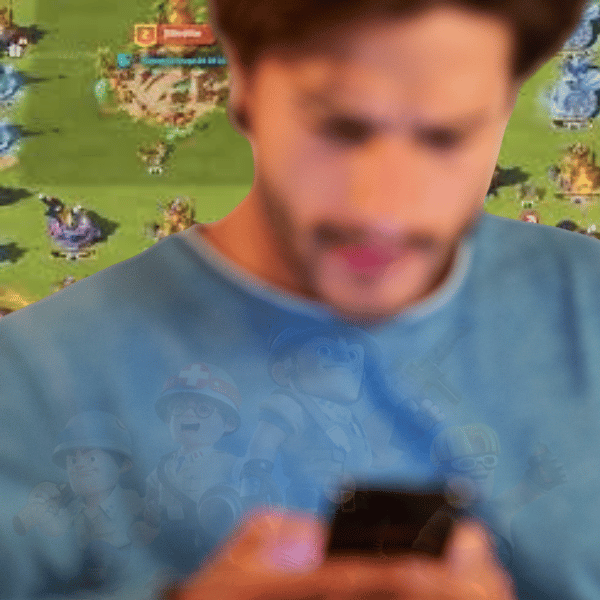
I’m not anti-technology.
I’m not anti-games.
In fact, I grew up around gadgets, consoles, computers, and later on—smartphones.
I understand the appeal.
I understand the escape.
I understand how a game can quiet the noise in your head after a long day.
But what I’m seeing now—especially with mobile gaming—is something else entirely.
It feels uncomfortably close to drug addiction.
Mobile games today aren’t just games.
They’re carefully engineered reward systems.
Bright colors, daily streaks, loot boxes, limited-time events, micro-rewards every few seconds.
Dopamine on demand.
No setup.
No barrier.
Just pull the phone from your pocket and you’re instantly “rewarded.”
And when something gives you relief, validation, and excitement that fast and that often, the brain doesn’t treat it as entertainment anymore.
It treats it as a coping mechanism.
That’s where the danger starts.
Mobile Gaming and the Dopamine Trap
Drug addiction isn’t just about substances. It’s about dopamine hijacking—training your brain to crave a stimulus at the expense of everything else.
Mobile games do the same thing:
- You feel stressed → you open the game
- You feel bored → you open the game
- You feel uncomfortable → you open the game
Eventually, your brain stops asking why you feel bad and only asks where’s my phone?
I’ve seen people—good people—completely checked out of real life while physically present.
Sitting across from their spouse.
Sitting beside their kids.
Eyes glued to a screen, thumbs moving, mind elsewhere.
And the scary part?
They don’t even realize how far gone they are.
The Silent Damage to Relationships
Addiction doesn’t always look dramatic. Sometimes it looks like emotional absence.
When mobile gaming becomes a vice, relationships suffer in quiet, painful ways:
- Conversations get shorter
- Eye contact disappears
- Intimacy fades
- Patience wears thin
A partner doesn’t feel heard.
They feel competing with a screen.
And no one wins that competition—because a game never gets tired, never disagrees, never asks you to grow. It just keeps rewarding you for staying.
Marriages don’t usually break because of one big event.
They break because of neglect.
Because one person is there in body but not in spirit.
The Deepest Cost: Children Are Watching
This part bothers me the most.
Children don’t just listen to what we say. They model what we do.
When a child grows up watching a parent constantly on their phone:
- They learn that screens come before people
- They learn that boredom must be escaped, not processed
- They learn that attention is fragmented
Worse, they internalize it.
I’ve seen kids act out not because they want things—but because they want connection. And when they don’t get it, they either withdraw or mimic the same addictive behavior.
A child ignored for a screen doesn’t just feel lonely.
They feel unimportant.
And that’s a wound that lasts far longer than any game session.
10 Signs Mobile Gaming May Be an Addiction (Not Just a Hobby)
- You feel irritated or anxious when you can’t play
- You hide or minimize how much time you spend gaming
- You play “just a few minutes” that turn into hours
- You ignore conversations or responsibilities while gaming
- You choose gaming over spending time with loved ones
- You feel guilty after playing but keep doing it anyway
- Your sleep suffers because of late-night gaming
- You use games to escape stress, conflict, or emotions
- People close to you have complained about your phone use
- You feel more “alive” in the game than in real life
If several of these hit close to home, that’s not judgment.
That’s awareness.
What You Can Do (Before It Costs You More)
- Set hard boundaries
No phone during meals. No gaming during family time. No exceptions. - Track your usage honestly
Most phones already show screen time. Look at it—don’t justify it. - Replace, don’t just remove
Addiction leaves a void. Fill it with movement, conversation, or creative work. - Talk about it openly
Acknowledge the issue and work towards rebuilding trust. - Be the example you want your children to follow
They learn discipline by watching you practice it.
This Isn’t About Quitting Everything
Let me be clear:
Mobile phones and games are not evil.
Gaming in moderation can be fun.
Relaxing.
Even social.
My guilty pleasure is a little Candy Crush once or twice a week. I know, I know… such an outdated game. In fact I’ve erased it for so long that I just remembered it last year when I was feeling a bit down myself.
That’s the only one I keep in my phone these days and sometimes I even delete it if it interferes with life.
But anyway, back to phones… phones help us work, connect, and create.
The problem starts when a device:
- Replaces human connection
- Becomes your emotional regulator
- Takes priority over the people who love you
When that happens, it’s no longer entertainment.
It’s control.
I don’t want to live a life where my best memories are loading screens and achievement badges.
I don’t want my kids to remember the back of my phone more clearly than my face.
And I don’t want any marriage—mine or anyone else’s—to quietly fall apart because a game was always more urgent than a conversation.
Moderation isn’t about restriction.
It’s about choosing what matters most.
And for me, that will always be people—over pixels.

