

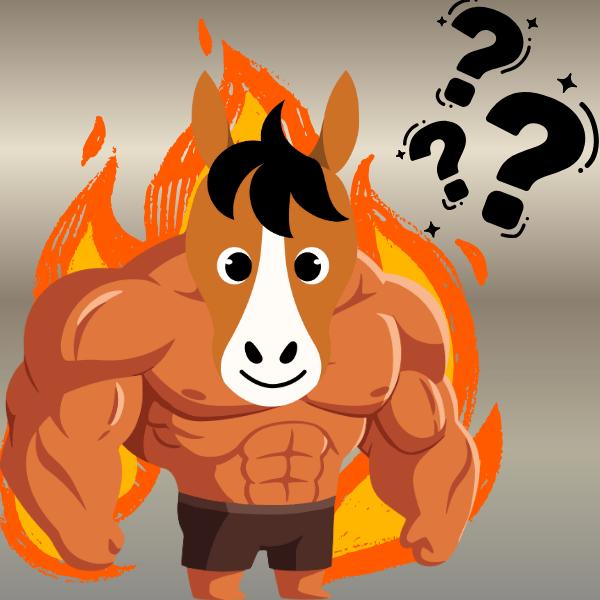
Horsepower is one of those words everyone uses—especially when talking about cars, motorcycles, and engines—but very few people actually stop to ask: what is horsepower, really?
Is it still important today?
Or is it just an old-school bragging metric that refuses to die?
Since we’ve just wrapped up the Chinese New Year and entered the Year of the Fire Horse, this feels like the perfect time to talk about power—where it came from, what it means, and whether it still matters in the modern world.
What Exactly Is Horsepower?
At its simplest, horsepower is a unit of power.
Power measures how fast work gets done. Not how heavy something is. Not how strong it looks. But how quickly energy is used to move something.
In mechanical terms:
1 horsepower = 550 foot-pounds of work per second
That means lifting 550 pounds, one foot, every second.
But did you know that that definition came from marketing?
Who Came Up With Horsepower?
Horsepower was coined in the late 1700s by James Watt, the same guy whose name we now use for watts (yes, that Watt).
Watt was selling steam engines, and he needed a way to explain how powerful his machines were compared to something people already understood: horses.
At the time, horses powered mills, pumps, carts—basically the engines of their era. Watt observed draft horses at work and calculated an average output. He then rounded it up (smart move, James) and declared:
One steam engine horsepower equals the work of one horse.
Was it perfectly accurate?
Not really.
Was it effective?
Absolutely.
The name stuck.
Because it was never meant to be scientific—it was meant to be relatable.
People couldn’t visualize “joules per second” or “foot-pounds per second.” But they could imagine a horse pulling a load.
Even today, the term survives because it’s intuitive. Saying “300 horsepower” immediately paints a picture of strength and performance—even if most people can’t define it mathematically.
How Horsepower Is Calculated
In vehicles, horsepower is usually calculated using torque and engine speed (RPM).
The Classic Formula
Horsepower = (Torque × RPM) ÷ 5252
- Torque = twisting force (how hard the engine turns)
- RPM = how fast the engine spins
- 5252 = a constant derived from unit conversions
This formula explains something important:
Horsepower is not separate from torque—it’s torque over time.
Torque vs Horsepower (The Confusing Part)
This is where many arguments begin.
| Torque | Horsepower |
| How hard the engine twists | How fast work is done |
| Helps you move from a stop | Helps you keep moving fast |
| Felt at low RPM | Felt at high RPM |
| Great for hauling | Great for top speed |
A vehicle with high torque but low horsepower feels strong off the line.
A vehicle with high horsepower but low torque shines at higher speeds.
You need both—but in different amounts depending on use.
What Horsepower Does to Vehicles
Horsepower affects several key characteristics:
- Top speed
- Acceleration at higher speeds
- Overtaking ability
- Performance under load
- Sustained high-speed driving
Two vehicles with the same horsepower can feel completely different.
Why?
Because of:
- Vehicle weight
- Gear ratios
- Tire size
- Aerodynamics
- Drivetrain losses
A 300-hp lightweight hatchback will feel very different from a 300-hp SUV.
That’s why modern performance discussions often include power-to-weight ratio, not just raw horsepower numbers.
Is Horsepower Still Important Today?
Yes—but less than it used to be.
Modern vehicles benefit from:
- Better transmissions
- Turbocharging
- Hybrid systems
- Electric motors
Especially with EVs, horsepower becomes less relevant than instant torque delivery.
Electric cars often feel brutally fast even with modest horsepower numbers because maximum torque is available immediately—no RPM buildup required.
Still, horsepower remains useful for:
- Comparing vehicles within the same class
- Understanding high-speed performance
- Marketing
Horsepower in the Age of EVs and Hybrids
Electric vehicles have complicated things.
Some manufacturers quote:
- Peak horsepower
- Combined system horsepower
- Wheel horsepower equivalents
This can confuse buyers. But the takeaway is simple:
Horsepower still matters—but how it’s delivered matters more.
Smooth, usable power beats big numbers on paper.
Horsepower Around the World
Different regions measure horsepower differently:
| Measurement | Region |
| Mechanical HP | US |
| Metric HP (PS) | Europe, Asia |
| Kilowatts (kW) | Global standard |
1 HP ≈ 0.746 kW
That’s why you’ll sometimes see cars advertised with kilowatts instead of horsepower—it’s more precise and more international.
The Fire Horse: Power With Temperament
As we step into the Year of the Fire Horse, the symbolism is hard to ignore.
The Horse represents:
- Strength
- Speed
- Independence
- Drive
Fire adds:
- Intensity
- Passion
- Unpredictability
Which is fitting—because horsepower without control is useless.
A powerful engine needs:
- Proper gearing
- Skilled input
- Purposeful direction
What matters more today is:
- How power is delivered
- How usable it is
- How efficiently it’s turned into motion
So the next time someone says they’ve got this or that much kind of horsepower, remember:
power is impressive—but control, balance, and intent are what actually move you forward.
Very fitting for the Year of the Fire Horse

